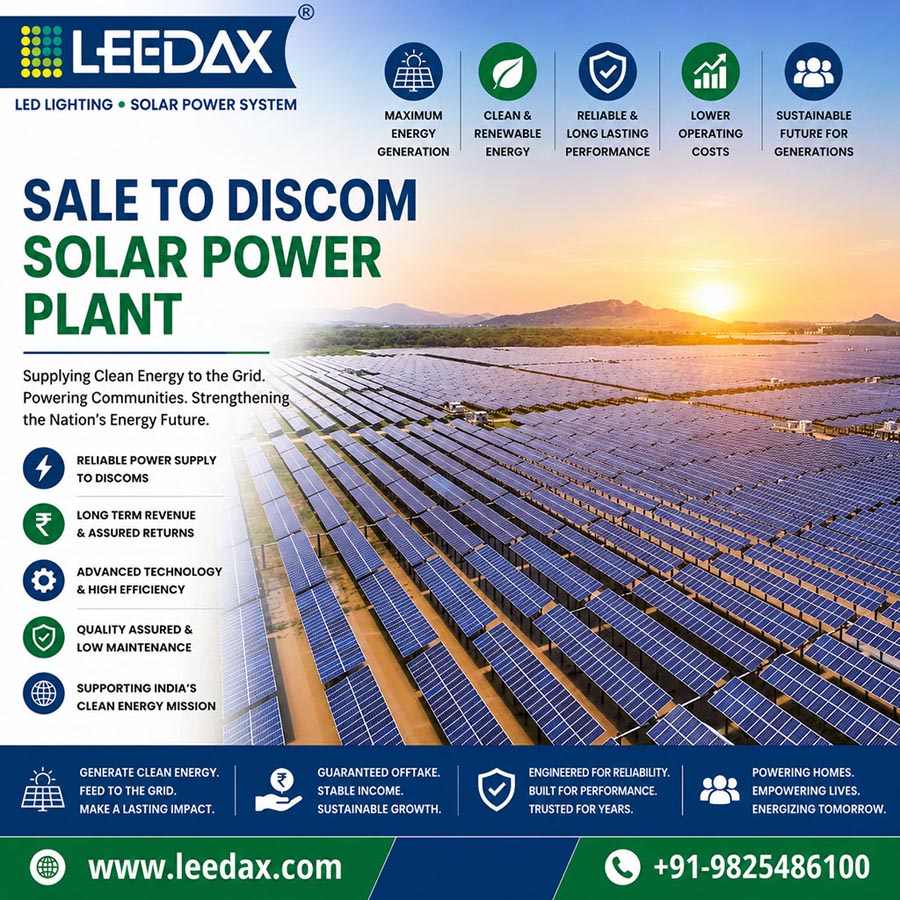
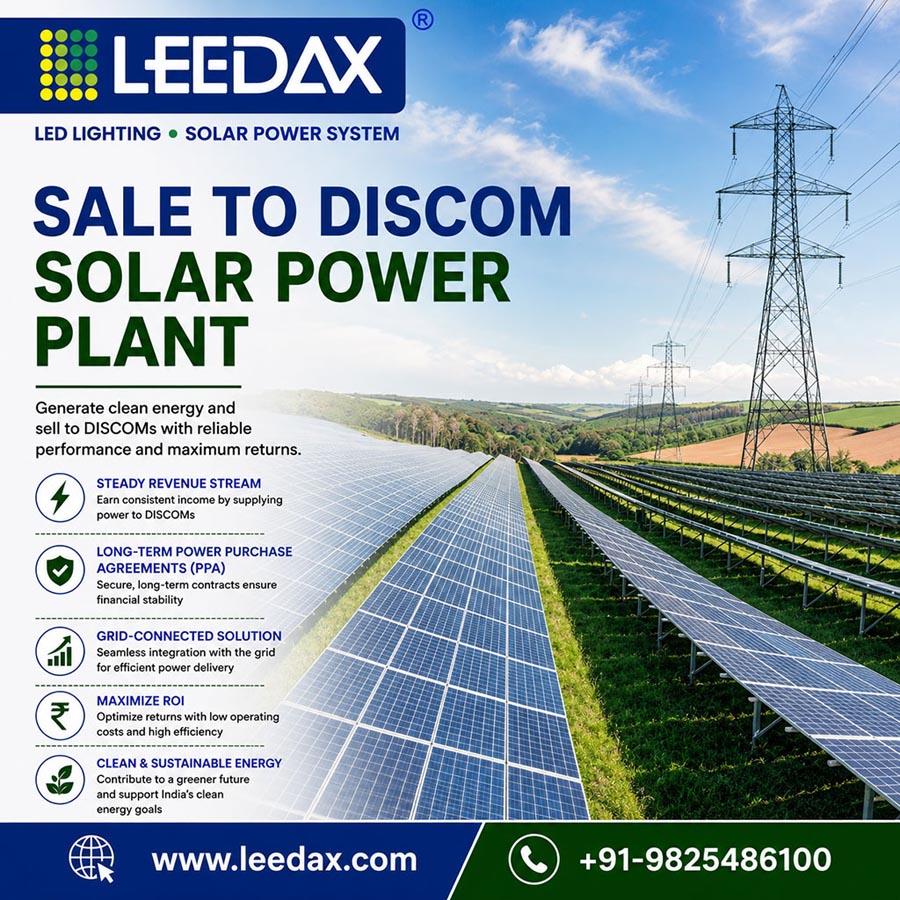
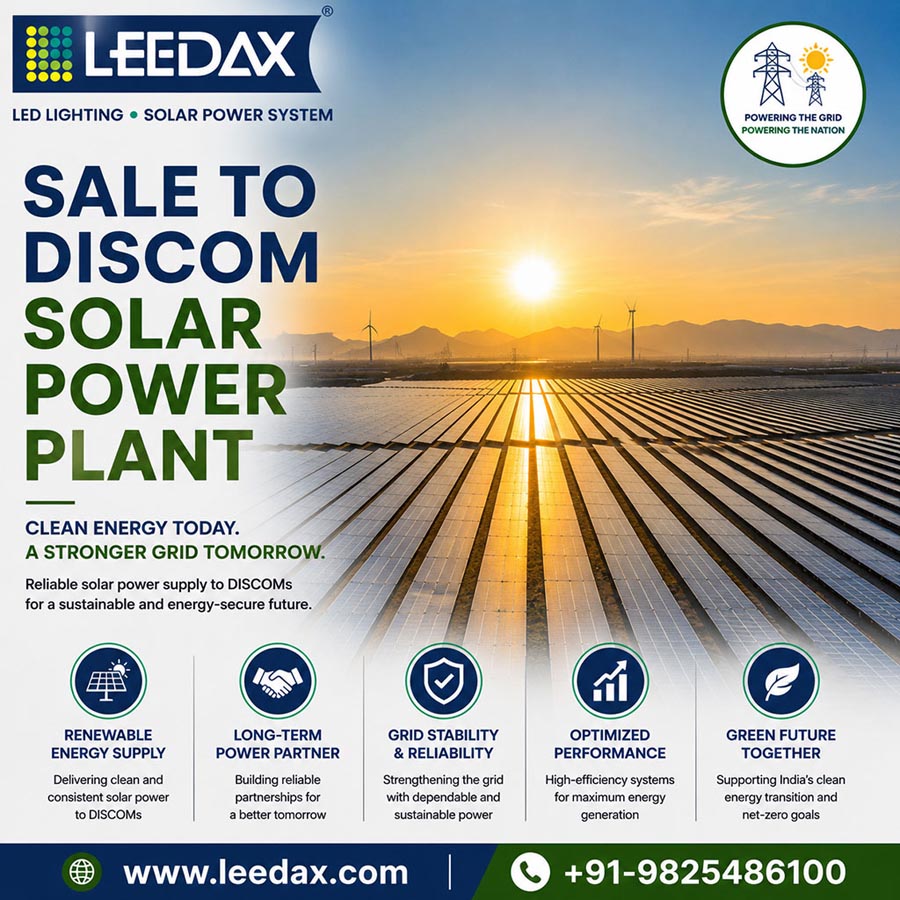
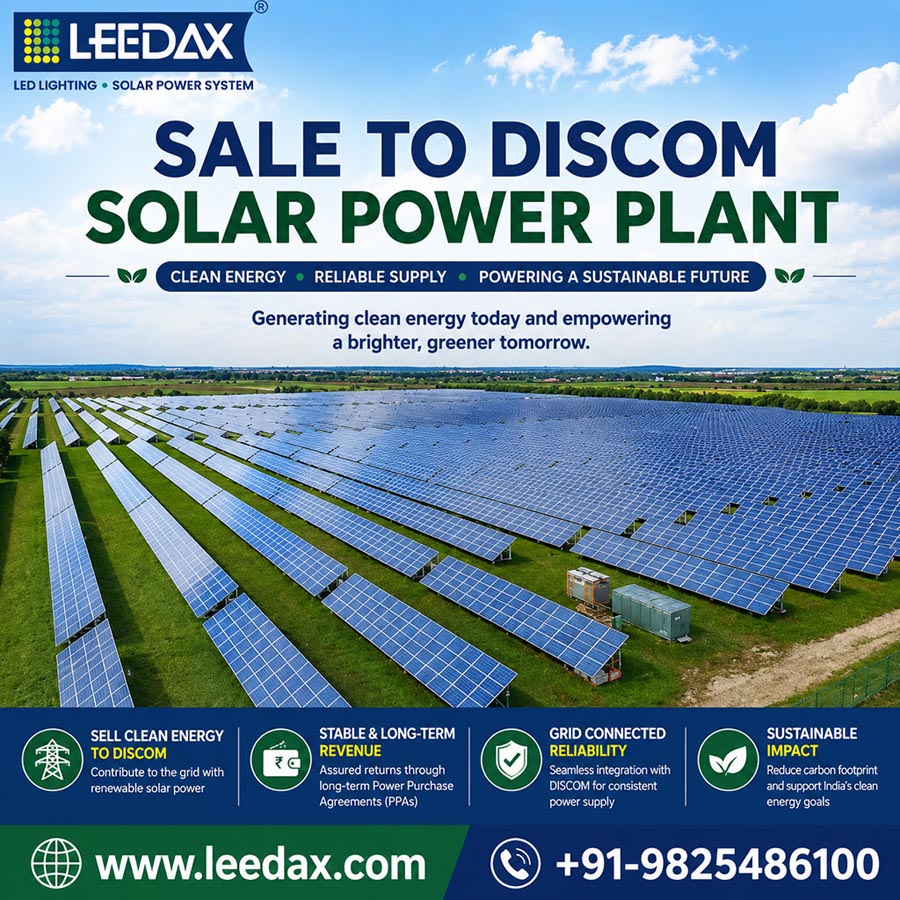
Sale to DISCOM Solar PV Projects refers to utility-scale solar power projects where electricity generated by a solar photovoltaic (PV) plant is supplied to a Distribution Company (DISCOM) under an approved Power Purchase Agreement (PPA), tariff arrangement or applicable renewable-energy procurement mechanism. These projects play an important role in increasing renewable electricity generation and supporting India’s transition toward cleaner and more sustainable power infrastructure.
In a typical solar power project for sale to DISCOM, a solar PV plant is developed at a suitable site with adequate solar irradiation, land availability and grid connectivity. The electricity generated by the solar panels is converted through inverters and evacuated through the project’s electrical infrastructure to the designated grid interconnection point. The DISCOM purchases the generated electricity according to the applicable contractual and regulatory framework.
Large-scale solar PV projects for DISCOMs require careful planning of land, solar resource, module technology, inverter capacity, evacuation infrastructure, transmission connectivity, metering, protection systems and grid synchronization. Depending on the project structure, the plant may be developed through competitive bidding, tender-based procurement, long-term PPAs or other permitted mechanisms.
A successful DISCOM solar project requires coordination between the project developer, EPC contractor, DISCOM, transmission utility, electrical authorities, land agencies and other stakeholders. Proper engineering and project execution are essential to achieve reliable generation, grid compliance and long-term project performance.
LEEDAX can provide solar EPC solutions for utility-scale and grid-connected solar PV projects, including engineering, procurement, installation, testing and commissioning. The project design can be customized according to capacity, site conditions, evacuation requirements, applicable technical specifications and project objectives.
| Project Type | Grid-connected utility-scale Solar PV Power Project |
| Power Generation | Electricity generated through photovoltaic solar modules |
| Solar Module Technology | Mono PERC / TOPCon / other approved high-efficiency PV technology |
| Project Capacity | From utility-scale projects to large multi-MW solar power plants |
| Solar Inverter | String or central inverter configuration based on project design |
| Module Mounting | Fixed-tilt / tracker-based structure depending on project requirements |
| Mounting Structure | Hot-dip galvanized steel / engineered solar mounting structure |
| DC System Voltage | Selected according to module and inverter configuration |
| AC Evacuation | Project-specific medium/high-voltage evacuation system |
| Grid Connectivity | Interconnection at the approved grid/substation point |
| Power Transformer | Capacity and voltage level as per electrical design and grid requirements |
| Energy Metering | ABT / bidirectional / designated generation metering as applicable |
| SCADA & Monitoring | Remote monitoring of generation, equipment and plant performance |
| Protection System | Relay protection, switchgear, isolators, surge protection and associated systems |
| Earthing & Lightning Protection | Designed according to applicable electrical and site requirements |
| Operation & Maintenance | Preventive maintenance, module cleaning, monitoring and equipment inspection |
Developing a Solar PV Project for Sale to DISCOM provides benefits at the project, utility and energy-system level. These projects enable large-scale renewable electricity generation and can contribute to India’s increasing demand for clean and sustainable power.
Large-Scale Renewable Energy Generation
Utility-scale solar plants can generate substantial quantities of renewable electricity and supply it directly to the designated power grid.
This supports the expansion of clean-energy generation capacity.
Long-Term Power Offtake
Where supported by an applicable PPA or procurement arrangement, the project can establish a structured framework for supplying electricity to the designated DISCOM or other authorized power purchaser.
The commercial terms depend on the applicable tender and agreement.
Reduced Dependence on Conventional Generation
Solar electricity can contribute to diversification of the electricity-generation mix and reduce dependence on conventional fuel-based generation over time.
Lower Operating Requirements
Solar PV plants do not require fuel combustion during electricity generation.
After commissioning, the primary operational activities include monitoring, preventive maintenance, module cleaning, vegetation management and equipment servicing.
Scalable Solar Infrastructure
DISCOM solar projects can be developed at different capacities depending on land availability, grid connectivity, project economics and procurement requirements.
This makes utility-scale solar suitable for large renewable-energy programs.
Environmental Benefits
Solar PV generation produces electricity without direct combustion-related emissions during operation.
Large-scale solar generation can therefore contribute to broader carbon-reduction and renewable-energy objectives.
Productive Land Utilization
Suitable non-agricultural or otherwise permitted land parcels can be utilized for large-scale solar power generation, subject to applicable land-use regulations and project approvals.
Strengthening the Power Grid with Renewable Energy
Properly planned solar projects connected to the appropriate transmission or distribution network can add renewable generation capacity to the electricity system and support the growing integration of clean energy.
Potential Long-Term Project Value
A professionally engineered and efficiently operated solar PV project can become a long-term infrastructure asset, subject to the project’s PPA, tariff, financing structure, regulatory conditions and actual energy generation.
Sale to DISCOM Solar PV Projects can be applied across a wide range of utility-scale renewable-energy development programs. These projects are particularly relevant where solar power developers, infrastructure companies, investors and EPC contractors seek to develop grid-connected solar generation capacity for supplying electricity to a DISCOM or another authorized power purchaser.
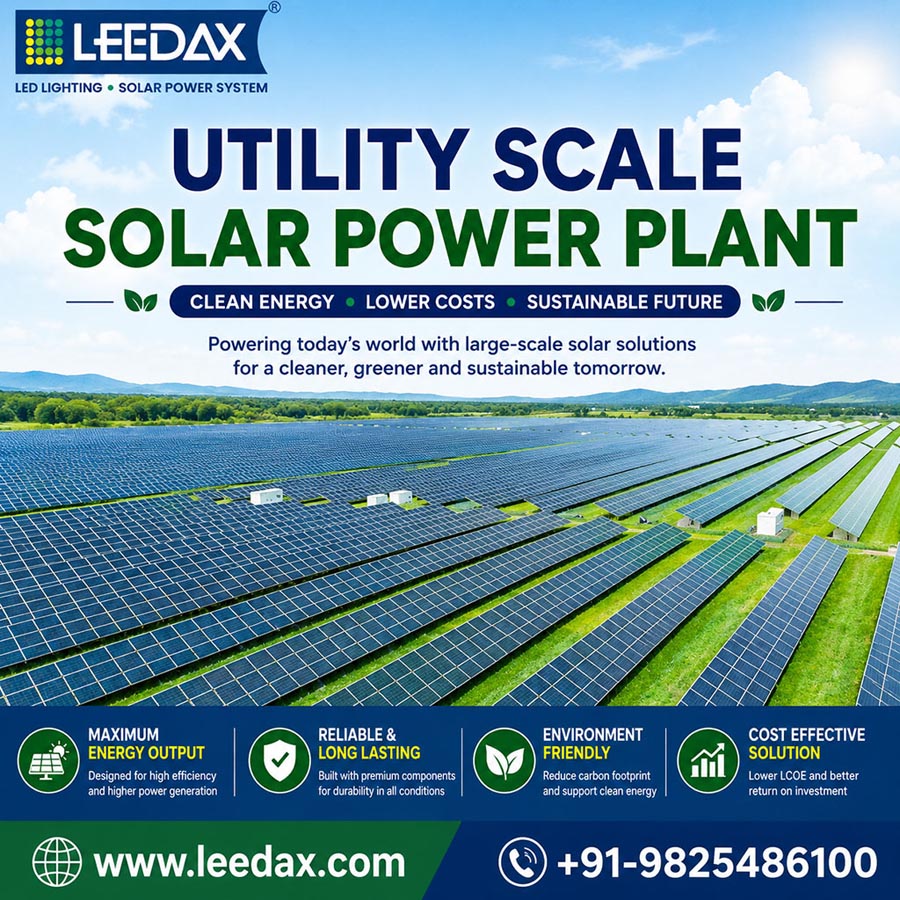
Utility-Scale Solar Power Plants
Large-scale solar PV plants can be developed on suitable land and connected to the electricity grid through an approved substation or transmission network.
Such projects can generate renewable electricity at utility scale.
DISCOM Renewable Energy Procurement
Distribution companies can procure solar electricity through applicable tenders, competitive bidding processes, PPAs or other approved procurement mechanisms.
Solar developers can participate in such opportunities subject to eligibility and tender requirements.
Solar Parks
Solar parks can provide common infrastructure such as roads, transmission facilities and other project-support infrastructure, potentially simplifying the development of multiple solar PV projects within a designated area.
Independent Power Producer Projects
Solar developers can develop projects as Independent Power Producers (IPPs) and sell generated electricity under an applicable long-term contractual arrangement, subject to the project’s regulatory and commercial framework.
State-Level Solar Power Projects
State renewable-energy programs can use utility-scale solar PV plants to increase renewable generation capacity and meet applicable renewable-energy procurement objectives.
Large Grid-Connected Solar Projects
Solar projects can be established near suitable grid substations where adequate evacuation capacity is available.
Proper planning of the generation system and evacuation infrastructure is essential for efficient power delivery.
Solar Projects Under Competitive Bidding
Developers may participate in competitive tenders issued by DISCOMs or other authorized procuring entities.
Project design, tariff, commissioning schedule, performance obligations and technical specifications are governed by the applicable tender and contractual documents.
Hybrid Renewable Energy Projects
Where permitted by the procurement framework, solar generation may be integrated with other renewable-energy technologies or energy-storage solutions to improve the project’s generation profile and grid-support capabilities.
LEEDAX Lighting Technologies is an R&D-driven manufacturer and solutions provider specializing in Manufacturing and Exporting of LED Lighting Solutions, Solar Lighting Systems and Solar Power EPC Solutions.
Copyright © 2026 Leedax. All rights reserved.
Website Designed & Developed by Opti Matrix