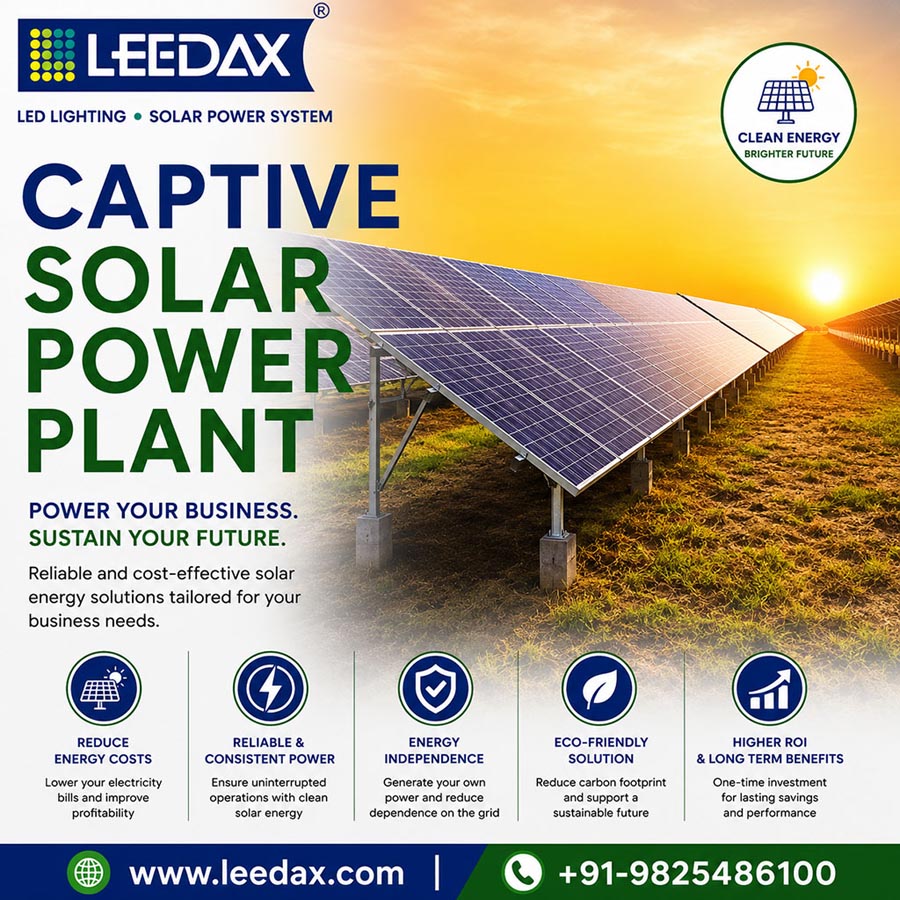
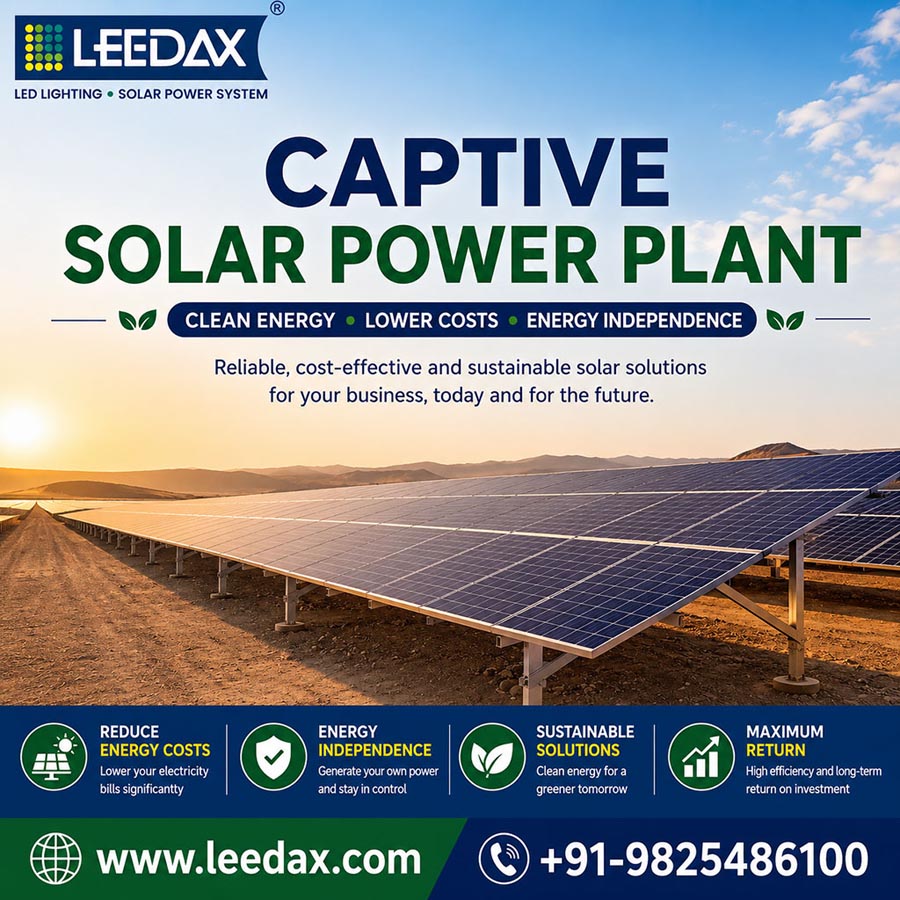
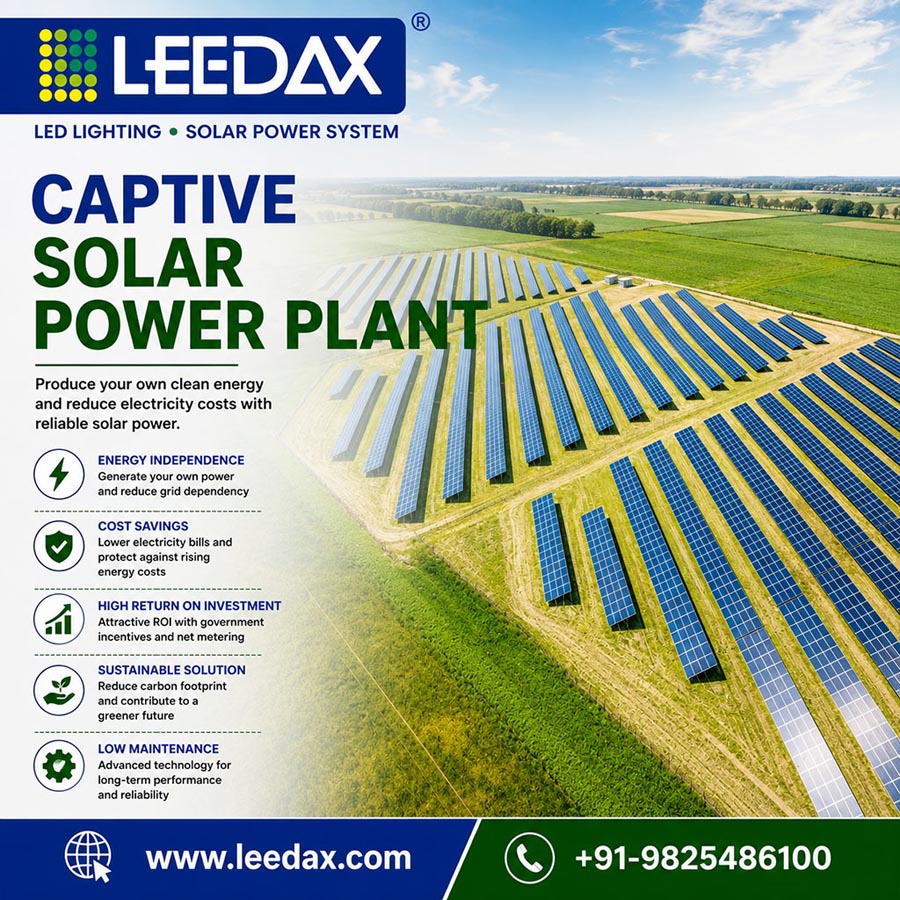
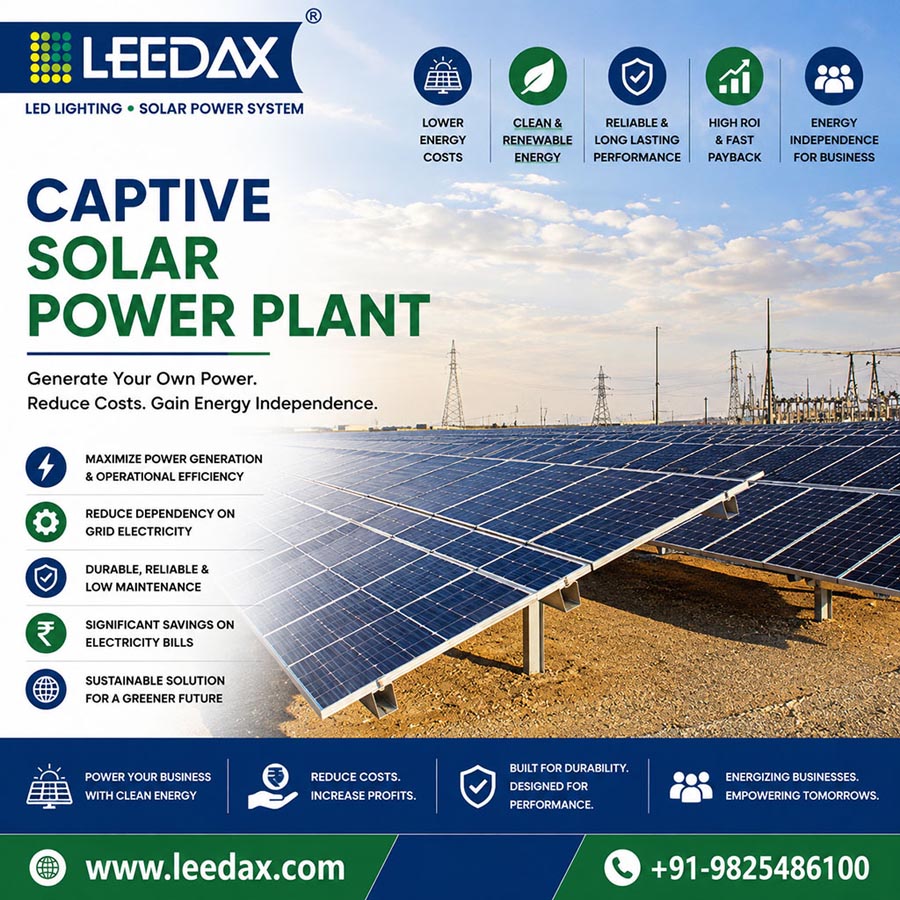
Captive Solar Power Plants are renewable energy systems developed to generate electricity primarily for consumption by the power plant owner or an eligible captive consumer. They are an increasingly important solution for industries and businesses seeking greater control over their energy costs, increased renewable-energy adoption and long-term power procurement strategies.
Industries such as manufacturing plants, engineering units, chemical industries, textile factories, pharmaceutical companies, automotive facilities, metal processing units and large commercial establishments often require substantial quantities of electricity. A Captive Solar Power Plant for Industries can provide a dedicated renewable-energy generation source that may be connected to the consumer’s electrical system through an appropriate project structure.
Captive solar projects may be developed as on-site solar power plants or as larger off-site solar projects where electricity is delivered through the applicable grid and power transmission arrangements. Depending on the project structure, applicable regulations and eligibility requirements, captive and group-captive solar models can be evaluated for suitable consumers.
LEEDAX provides customized Captive Solar EPC solutions, covering project feasibility, solar resource assessment, engineering, solar module selection, inverter selection, electrical infrastructure, transmission-related requirements where applicable, installation, testing and commissioning.
A captive solar project is different from a conventional rooftop solar installation because its design may involve larger generation capacity, dedicated electrical infrastructure, grid connectivity and project-specific power-delivery arrangements.
LEEDAX’s objective is to help industrial and commercial consumers evaluate suitable captive solar power solutions based on electricity consumption, renewable-energy objectives, project location, available infrastructure and applicable regulations.
Whether the requirement is for an on-site captive solar plant, off-site captive solar project or an eligible group-captive renewable-energy arrangement, LEEDAX can develop a customized solar EPC solution focused on higher generation, energy efficiency, reliability, quality and long-term performance.
Generate Your Own Renewable Power. Improve Energy Management. Build a Sustainable Future with LEEDAX.
| Project Type | Captive Solar Power Plant |
| Primary Application | Industrial / Commercial / High Energy Consumers |
| Project Configuration | On-Site / Off-Site as Applicable |
| System Type | Grid-Connected Solar PV System |
| Solar Module Technology | High-Efficiency Mono / TOPCon / Latest Available Technology |
| Solar Module Capacity | As per Detailed Project Design |
| Solar Inverter | String / Central Grid-Connected Inverter |
| Mounting Structure | Ground-Mounted / Rooftop / Project-Specific Structure |
| DC Cabling | UV-Resistant Solar DC Cable |
| AC Cabling | Suitable LT / HT Grade Power Cable |
| Electrical Protection | AC & DC Protection / SPD / Isolators as Applicable |
| Earthing System | Equipment & Electrical Earthing as per Design |
| Grid Connectivity | As per Approved Electrical & Grid-Connection Design |
| Monitoring System | Online Solar Plant Monitoring |
| EPC Scope | Engineering, Procurement, Installation, Testing & Commissioning |
Captive Solar Power Plants
Dedicated Renewable Energy Generation
Captive solar plants are developed to generate renewable electricity for the associated consumer or eligible captive consumers.
This provides businesses with a dedicated renewable-energy generation asset.
Suitable for High Energy-Consumption Industries
Industries with substantial and predictable electricity requirements can consider captive solar power for industries as part of their long-term energy strategy.
On-Site or Off-Site Configuration
Depending on project requirements, captive solar generation may be developed at the consumer’s premises or at a suitable off-site solar project location, with electricity delivery structured according to applicable regulations.
High-Efficiency Solar Technology
Modern high-efficiency solar modules such as Mono and TOPCon technologies can be considered to optimize energy generation from the available project area.
Advanced Solar Inverter Systems
String or central inverter configurations can be selected according to plant size, layout, electrical architecture and project requirements.
Comprehensive Electrical Infrastructure
Large captive solar projects may require detailed electrical infrastructure including evacuation systems, transformers, switchgear, protection systems, metering and grid interconnection facilities as applicable.
Online Monitoring
Advanced monitoring systems can provide information regarding plant generation, inverter performance, system availability and energy yield.
Customized Solar EPC Engineering
LEEDAX designs captive solar projects according to consumer demand, solar resource, project location, electrical infrastructure, grid connectivity and applicable technical requirements.
Scalable Renewable Energy Solution
Captive solar projects can form part of a broader renewable-energy strategy for businesses seeking to increase the share of solar power in their electricity consumption.
A properly structured Captive Solar Power Plant for Industries can provide financial, operational and sustainability-related benefits to eligible consumers.
Potential Reduction in Power Costs
One of the key reasons businesses evaluate captive solar power is the potential to reduce the effective cost of electricity consumed from conventional sources.
Actual savings depend on project economics, electricity tariffs, generation, transmission arrangements, regulatory charges and the applicable project structure.
Greater Control Over Renewable Energy Generation
A captive solar project provides the associated consumer with a dedicated renewable-energy generation asset, allowing the organization to take a more active role in its energy strategy.
Suitable for Large Electricity Consumers
Large industrial consumers with substantial electricity demand can consider captive solar as an alternative or complementary renewable-energy procurement strategy.
Long-Term Energy Planning
Solar power plants are long-term infrastructure assets.
A captive solar project can support an organization’s long-term approach to renewable electricity procurement and energy management.
Reduced Dependence on Conventional Energy
Increasing renewable electricity generation can reduce an organization’s dependence on conventional electricity sources, subject to the project’s operating model.
Supports Renewable Energy Targets
Businesses with sustainability objectives can use captive solar generation to increase their renewable-energy consumption and support corporate environmental goals.
Better Energy Cost Visibility
A well-designed captive solar project can provide greater visibility into a portion of the organization’s long-term renewable-energy costs, although actual financial outcomes depend on project-specific factors.
Environmental Benefits
Solar power generates electricity from sunlight without direct combustion during operation.
Captive solar therefore supports the transition toward cleaner electricity generation.
Supports Corporate Sustainability
Captive solar power can become an important component of an organization’s ESG, sustainability and renewable-energy strategy.
Long-Term Renewable Energy Asset
With appropriate design, operation and maintenance, a solar power plant can provide renewable electricity generation over an extended operating life.
Captive Solar Power Plants are particularly relevant for organizations with substantial and predictable electricity requirements. The appropriate project structure depends on the consumer’s energy profile, location, regulatory eligibility and project economics.
Manufacturing Industries
Automobile, engineering, machinery, electrical equipment and other manufacturing industries can consider captive solar power to support their large electricity requirements.
Textile Industries
Textile manufacturing and processing units often have significant electricity consumption from motors, machinery, HVAC and production equipment, making renewable energy an important consideration.
Pharmaceutical Industries
Pharmaceutical manufacturing facilities and processing plants can evaluate captive solar as part of their long-term renewable-energy strategy.
Chemical Industries
Chemical manufacturing facilities with high energy requirements can consider suitable captive solar projects based on their electricity demand and project feasibility.
Metal & Steel Industries
Metal processing, fabrication and steel-related industries can explore captive solar power solutions to increase renewable electricity consumption.
Food Processing Industries
Large food processing plants, dairy facilities, beverage manufacturers and cold-chain operations can consider captive solar for their substantial electricity requirements.
Cement & Building Material Industries
Cement-related and building-material manufacturing facilities can evaluate captive solar projects as part of their renewable-energy procurement strategy.
Large Commercial Consumers
Large commercial establishments and high-consumption commercial facilities may also evaluate captive or eligible renewable-energy structures based on applicable regulations.
Industrial Parks & Large Manufacturing Clusters
Industrial parks and groups of eligible consumers can explore suitable renewable-energy structures, including group-captive arrangements where legally and technically applicable.
Multi-Location Businesses
Organizations with multiple facilities can evaluate captive renewable-energy strategies to support their broader electricity and sustainability requirements, subject to applicable regulatory and contractual arrangements.
LEEDAX Lighting Technologies is an R&D-driven manufacturer and solutions provider specializing in Manufacturing and Exporting of LED Lighting Solutions, Solar Lighting Systems and Solar Power EPC Solutions.
Copyright © 2026 Leedax. All rights reserved.
Website Designed & Developed by Opti Matrix