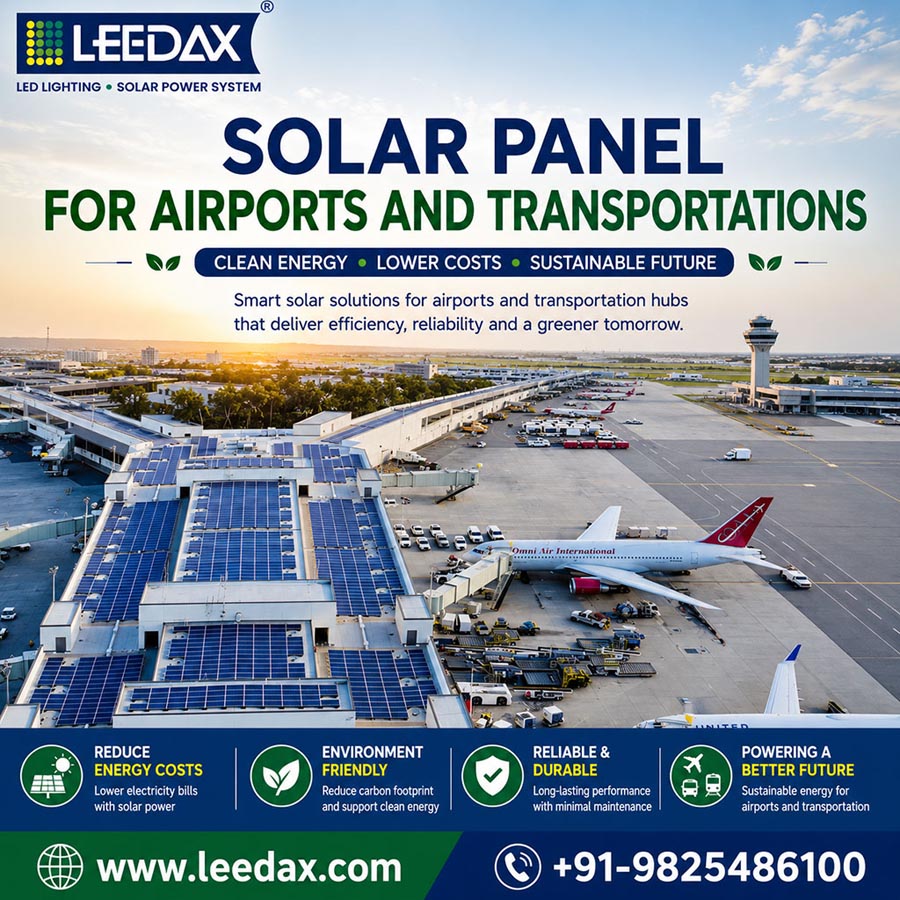
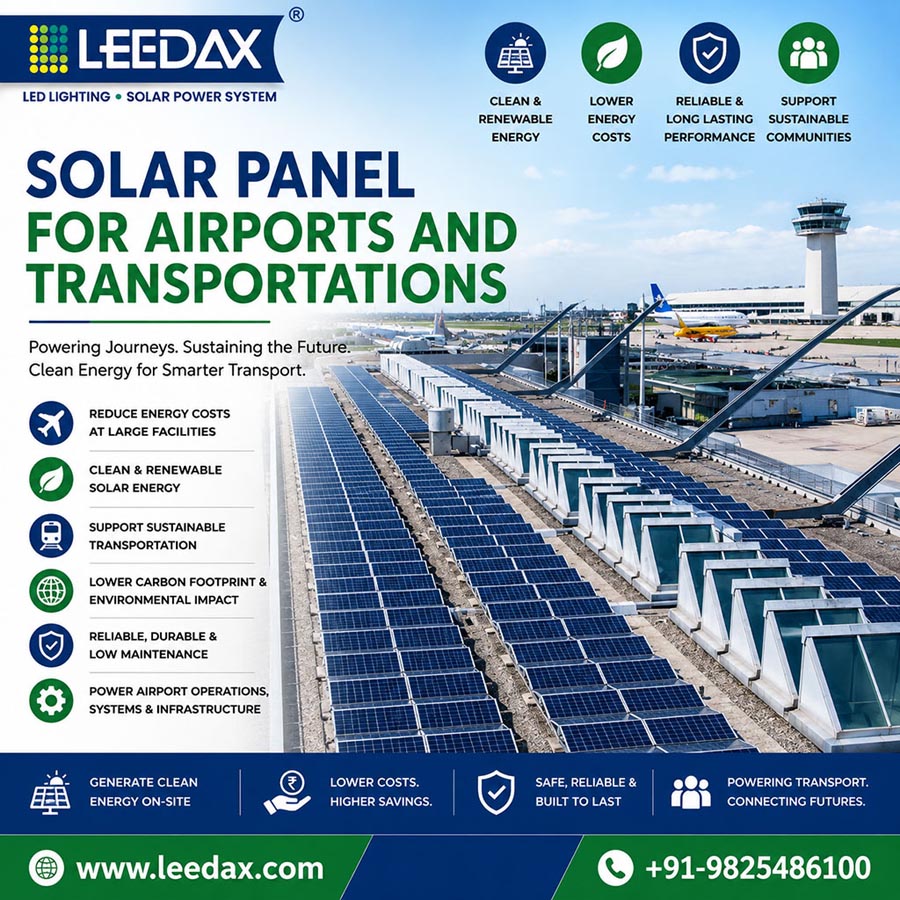
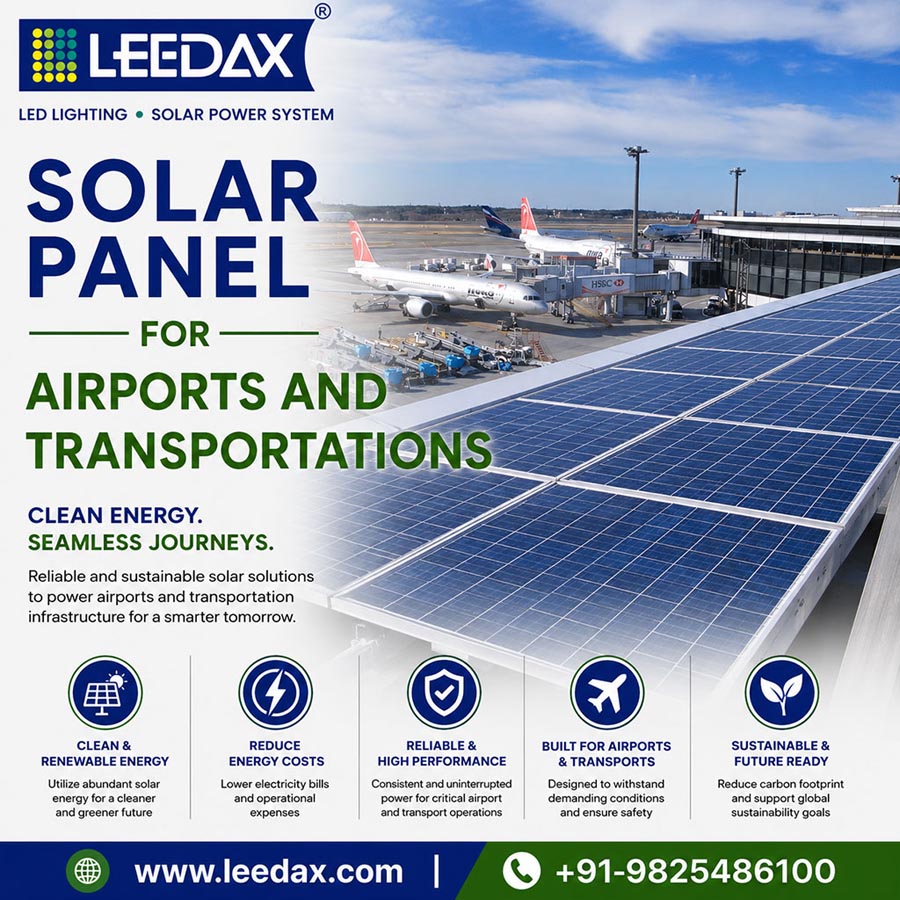
Airports, railway stations, metro systems, bus terminals, highways, logistics hubs and other transportation infrastructure are among the most energy-intensive public and commercial facilities. With large rooftops, parking areas, terminal buildings, maintenance facilities and open spaces available for solar installation, solar panels for airports and transportation offer an effective way to generate clean electricity, reduce operating costs and support long-term energy sustainability.
A well-designed airport solar power system can be installed on airport terminal rooftops, administrative buildings, parking structures, cargo terminals and suitable ground-mounted areas. Similarly, solar power for transportation infrastructure can be used at railway stations, metro stations, bus depots, toll plazas, highway facilities, warehouses, logistics parks and EV charging stations.
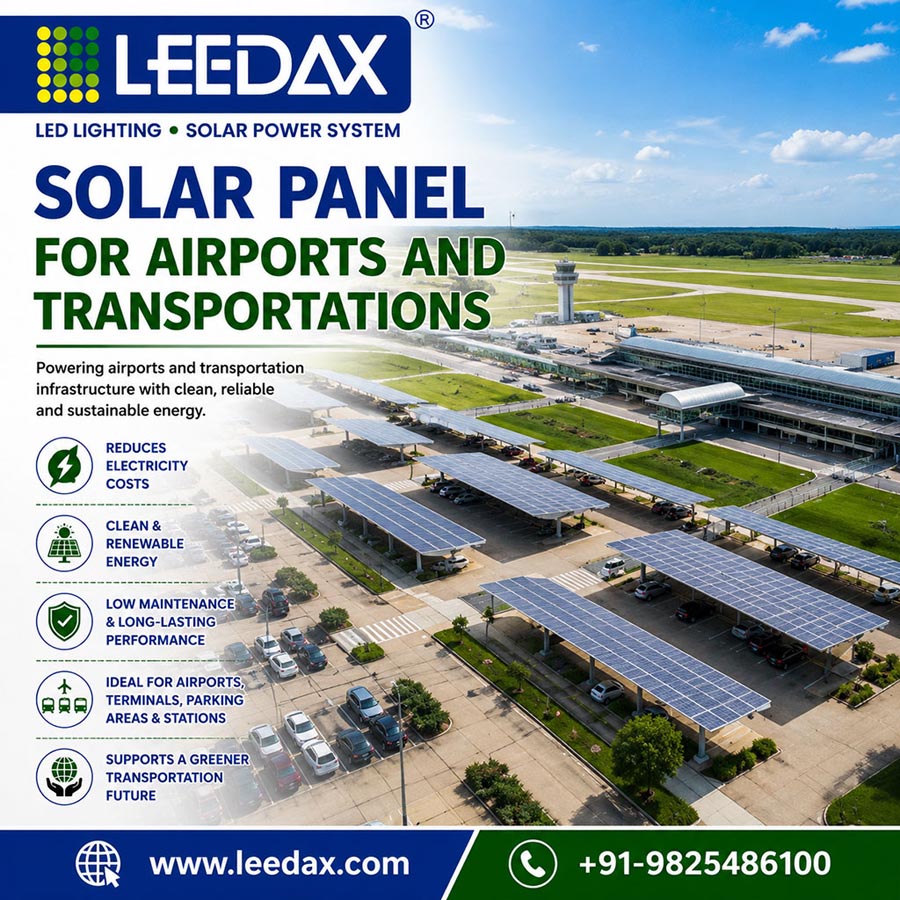
Solar photovoltaic (PV) systems convert sunlight into electricity that can be consumed directly by airport and transportation facilities. Depending on project requirements, systems can be designed as rooftop solar, ground-mounted solar, solar carports or other customized solar PV solutions. Energy generated during daylight hours can help power lighting, HVAC systems, baggage handling systems, elevators, escalators, communication equipment, offices, workshops, security systems and EV charging infrastructure.
For airports and transportation organizations looking to reduce their dependence on conventional grid electricity, commercial and industrial solar power systems can provide a scalable renewable energy solution. Solar generation can also contribute to lower carbon emissions and support corporate sustainability, renewable energy and environmental objectives.
LEEDAX can provide customized solar EPC solutions for airports and transportation projects, covering system design, engineering, procurement, installation, testing and commissioning according to project requirements. With appropriate feasibility assessment, structural evaluation, electrical design and safety planning, solar energy can become an important component of modern, energy-efficient transportation infrastructure.
| Solar Technology | High-efficiency Mono PERC / TOPCon / latest suitable crystalline PV technology |
| Solar Panel Capacity | Project-specific; suitable for rooftop, carport or ground-mounted applications |
| System Capacity | From small distributed systems to multi-MW solar PV installations |
| System Type | Grid-connected, hybrid or customized solar PV system |
| Solar Inverter | String / central inverter based on project size and design |
| Mounting Structure | Hot-dip galvanized steel / aluminium / customized engineered structure |
| Installation Location | Airport terminals, railway stations, metro stations, bus depots, parking areas and other suitable locations |
| Solar Carport | Suitable for airport and transportation parking areas with optional EV charging integration |
| Electrical Protection | DC/AC isolators, SPD, MCCB/MCB, earthing and other required protection systems |
| Monitoring System | Remote monitoring of solar generation, inverter performance and system parameters |
| Earthing | Dedicated equipment and system earthing as per applicable design requirements |
| Lightning Protection | Lightning protection system based on site-specific risk assessment |
| Grid Connectivity | Synchronization with existing electrical distribution system, subject to utility requirements |
| Energy Metering | Generation / import-export metering as applicable to project configuration |
| Operation & Maintenance | Preventive maintenance, monitoring, inspection and periodic cleaning |
| Design Life | Typically designed for long-term operation, subject to equipment specifications and maintenance |
Installing solar panels for airports and transportation facilities can provide significant financial, operational and environmental benefits. One of the primary advantages is the potential reduction in electricity purchased from the conventional power grid. Airports, railway stations, metro systems, bus terminals and logistics facilities often operate large electrical loads, making them suitable candidates for substantial solar energy generation.
Reduced Electricity Costs
Solar power generated during daylight hours can offset a portion of the facility’s grid electricity consumption.
Depending on the tariff structure, system size, operating profile and applicable regulations, this can contribute to long-term electricity cost savings.
Renewable Energy Generation
Solar PV produces electricity without direct fuel combustion during operation.
Using solar energy can help transportation organizations increase their share of renewable electricity and reduce dependence on conventional energy sources.
Lower Carbon Footprint
Replacing a portion of conventional grid electricity with solar generation can help reduce associated greenhouse-gas emissions.
This supports sustainability programs and environmental objectives of airports, transportation companies and public infrastructure organizations.
Better Utilization of Available Space
Large rooftops, parking areas and suitable open spaces can be converted into renewable-energy generation areas.
Solar carports can provide both electricity generation and weather protection for parked vehicles.
EV Charging Integration
Solar power can be integrated with electric vehicle charging stations at airports, railway stations, bus depots, parking facilities and logistics hubs, supporting the growing transition toward electric transportation.
Long-Term Energy Planning
A professionally designed solar PV project can become a long-term energy asset.
With appropriate monitoring and preventive maintenance, solar systems can provide predictable renewable electricity generation over their operating life.
Sustainability & Green Infrastructure
Solar energy can strengthen the sustainability profile of transportation infrastructure and support organizations seeking to implement cleaner and more energy-efficient facilities.
Solar panels for airports and transportation have applications across a wide range of infrastructure facilities. Airports are particularly suitable because terminal buildings, administrative offices, cargo facilities, maintenance buildings and parking areas can provide significant opportunities for solar PV installation.
Airports & Aviation Infrastructure
Solar PV systems can be installed on airport terminal rooftops, cargo buildings, administrative offices, maintenance facilities and suitable parking structures.
Solar energy can support terminal lighting, HVAC, baggage systems, offices, workshops, security infrastructure and other electrical loads.
Railway Stations & Railway Infrastructure
Solar power for railway stations can be used for station buildings, platforms, administrative offices, parking facilities, workshops and other suitable structures.
Rooftop solar can help reduce conventional electricity consumption while supporting railway sustainability initiatives.
Metro Stations
Metro stations and associated buildings can utilize rooftop solar systems for lighting, ventilation, offices, escalators, elevators and other electrical requirements.
Solar carports can also be considered for metro parking facilities.
Bus Terminals & Bus Depots
Bus stations and depots often have large roof structures and parking areas suitable for solar installations.
Solar PV can support depot lighting, offices, workshops, charging infrastructure and other electrical loads.
Highways & Toll Plazas
Solar energy can be deployed at toll plazas, highway administrative facilities, rest areas, maintenance buildings and suitable parking areas.
Solar-powered systems can support lighting, surveillance and other electrical infrastructure.
EV Charging Stations
Solar carports combined with EV charging stations can generate renewable electricity while providing covered parking for vehicles.
This can be particularly useful at airports, railway stations, bus terminals, commercial parking areas and logistics facilities.
Logistics & Transportation Hubs
Warehouses, distribution centers, cargo terminals and logistics parks often have large rooftops that can support commercial and industrial solar PV systems.
Solar electricity can help power material-handling equipment, lighting, offices, HVAC and other facility loads.
LEEDAX Lighting Technologies is an R&D-driven manufacturer and solutions provider specializing in Manufacturing and Exporting of LED Lighting Solutions, Solar Lighting Systems and Solar Power EPC Solutions.
Copyright © 2026 Leedax. All rights reserved.
Website Designed & Developed by Opti Matrix